May 01, 2019
0

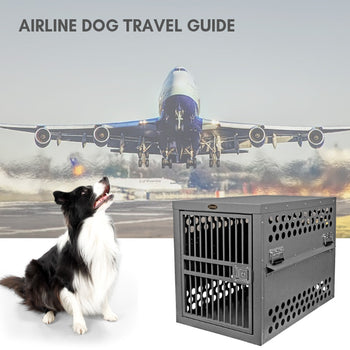
Every list of the best SUVs for dog owners leads with the same number: cubic feet of cargo space. It is a useful number, but it is not the one that decides whether your dog travels safely and comfortably. A cargo area can look enormous on paper and still be too narrow between the wheel wells for a crate, too tall at the liftgate for an older dog, or too short once the back seat is upright.
This guide walks through the SUVs worth shopping in 2026, including the Subaru Outback, Honda CR-V, Toyota RAV4, Subaru Forester, and Hyundai Santa Fe, and it explains the measurements that matter more than the brochure. We have spent seven years helping dog owners fit crash-tested crates, cargo barriers, and harnesses into their vehicles, so we look at SUVs the way our customers have to live with them: with a tape measure and a dog in the back.

Most dog-friendly SUV lists weigh the same handful of features. Four of them do most of the work, and they are the ones spec sheets rarely spell out.
Cubic feet measure volume, not usable shape. What decides whether a crate or a dog fits is the narrowest width across the floor, usually between the rear wheel wells, the length from the back of the rear seat to the door sill, and the height at the lowest point of the cargo opening. Two SUVs with the same advertised volume can have very different shapes, and a sloping roofline or an intruding wheel well can cost you space you counted on. That is why the first step in any comparison is to measure the actual opening instead of reading a number.

Seat position matters too. This guide lists both the space behind the rear seats and the maximum with the seats folded. If your dog rides in a crate or behind a barrier in the cargo area, you will usually keep the rear seats upright, so the behind-the-seat figure is the one to watch.
A dog who jumps in and out of an SUV every day is making a repeated impact on their joints, and an older dog may eventually refuse the jump altogether. A lower, flatter load floor makes entry easier, and a flat floor also lets a crate or barrier sit level. Hybrid hardware can complicate that. The CR-V Hybrid, for example, offers less cargo space behind the rear seats than the gas CR-V, which reflects hybrid components sitting under the cargo floor. That matters if your crate height is already tight. If joint health is a concern, a pet ramp is an inexpensive way to spare your dog the jump, and it works in nearly any SUV.
Dogs shed, drool, and track in mud, so durable, wipe-clean upholstery and a cargo area that is easy to hose out earn their keep. Airflow matters as well, because the back of an SUV can heat up faster than the front cabin. Look for a vehicle with good ventilation to the rear and plan on shades or a cover if your dog rides in direct sun.
Treat pet mode features with care. Some vehicles can keep the cabin climate running while parked, and they can be a useful backup. They should never become a reason to leave a dog in a parked vehicle, because a system can fail or shut off, and a dog left alone is at risk even in mild weather.
This is the factor almost no buying guide covers. A crate or barrier is only as secure as what it is anchored to, so check whether the cargo area has load anchors, whether the floor is flat, and whether the headrests can carry a headrest-mounted barrier. The MIM Safe VarioBarrier Universal, for example, needs a vehicle with load anchors and a flat floor, while the VarioBarrier HR mounts to the headrests for vehicles without cargo anchors or a flat floor.
The five vehicles below stand out for cargo space, a cargo area that suits a crate, and practical design for life with a dog. They are not ranked from best to worst. Each is the best fit for a different kind of dog household. The cargo figures are 2026 model-year specifications as reported by Kelley Blue Book, U.S. News, Autoblog, and CarGurus, and they vary by trim and powertrain. Many 2027 models are now reaching dealers, so confirm the numbers for the exact model year you plan to buy.
|
SUV |
Behind rear seats (cu ft) |
Max, seats folded (cu ft) |
Best for |
|---|---|---|---|
|
Subaru Outback |
34.6 |
80.5 |
One or two dogs, all-weather travel |
|
Honda CR-V (gas) |
39.3 |
76.5 |
Compact footprint, big cargo area |
|
Toyota RAV4 (hybrid) |
37.8 |
70.4 |
Fuel-efficient daily driving |
|
Subaru Forester |
27.5 to 29.6 |
69.1 to 74.4 |
Active dogs, dirt roads |
|
Hyundai Santa Fe |
40.5 (third row folded) |
79.6 |
Multiple dogs, flexible seating |

The Outback was redesigned for 2026 and now looks and measures like a midsize SUV instead of a wagon. Cargo space behind the rear seats grew from 32.6 to 34.6 cubic feet, with a maximum of 80.5 cubic feet when the 60/40 rear seats fold. It has also been reported to earn the Insurance Institute for Highway Safety's Top Safety Pick+ award, and Subaru sells pet and cargo partitions developed for it. Standard all-wheel drive suits owners who hike or travel with dogs in bad weather.
Customers have reported fitting Variocage crates into earlier Outbacks. Because the 2026 redesign changed the vehicle, measure the 2026 cargo area instead of assuming an older model's fit carries over.
The CR-V has the most cargo space of the compact SUVs in this guide, at 39.3 cubic feet behind the rear seats in gas models and 76.5 cubic feet with the seats folded. Hybrid models give up some seats-up space, at 36.3 cubic feet, while the 76.5 maximum stays the same. Some gas trims have a dual-level cargo floor, which is handy for luggage, but set it to the flat position when you are fitting a crate or barrier.
Its compact footprint also makes it easier to park than the larger models here, which suits owners with one medium or large dog and a daily commute.
Every 2026 RAV4 is a hybrid following a full redesign. It offers 37.8 cubic feet behind the rear seats and 70.4 cubic feet with them folded, about six cubic feet less than the gas CR-V at the maximum but ahead of the CR-V Hybrid with the seats up. It is a strong match for owners who want high fuel economy and enough cargo room for a medium-sized dog.
Because it is a hybrid, measure the height at the cargo opening and confirm the floor is flat before you order a crate.
The Forester trades some cargo depth for capability. Behind the rear seats it offers 29.6 cubic feet in the base model and 27.5 in higher trims, with a maximum of 74.4 or 69.1 cubic feet. That makes it a better match for one medium dog than for a large-breed crate. U.S. News reviewers describe it as more capable off-road than most compact SUVs, which appeals to owners who spend weekends on trailheads and fire roads.
If your dog is small to medium and your weekends involve dirt roads, it deserves a test drive.
The 2026 Santa Fe is the smallest three-row SUV in Hyundai's lineup, and its boxy shape pays off for dog owners. With the third row folded, it offers 40.5 cubic feet behind the second row, and 79.6 cubic feet with the second and third rows folded. Only 14.6 cubic feet remain behind the third row, so treat it as a two-row dog hauler most of the time and use the third row only when you need it.
Kelley Blue Book notes that the second and third rows fold nearly flat and that the large tailgate opens into a wide cargo area, both of which help when you are loading a crate or two dogs.
Households with giant breeds or three or more dogs often move up to larger three-row and full-size SUVs. Examples worth cross-shopping include the Kia Telluride, Honda Pilot, Hyundai Palisade, Volkswagen Atlas, and the Chevrolet Tahoe and Suburban. Cargo figures vary a great deal between these, and several are new or updated for 2027, so check the specific numbers for the model year you are considering and measure the cargo opening yourself.
Start with your dog, not the vehicle. Measure from the tip of the nose to the base of the tail and from the floor to the top of the shoulders, then add 3 inches to each. Those are the minimum interior dimensions a crate needs so your dog can stand, turn around, and lie down. Our guide on how to size a dog crate for your car walks through the process step by step.
Small and medium dogs have the most options. Almost any SUV in this guide can carry a single small or medium dog in a crate, and the smaller models add easier parking and better efficiency. Large breeds need more depth and height than their weight suggests, so prioritize cargo length behind the rear seat and a tall, wide opening. Giant breeds and multi-dog households should put the Santa Fe and larger three-row models at the top of the list.
Lifestyle matters as well. If you hike or camp with your dog, look at ground clearance, all-wheel drive, and wipe-clean surfaces. If you compete in dog sports and carry several crates and gear, prioritize a wide, flat cargo area and a gate system that divides the space. If you commute with one dog, a compact hybrid may serve you best.
Before you fall for an SUV, spend ten minutes with a tape measure. Measure the narrowest usable width across the cargo floor, which is usually between the rear wheel wells or at the bottom of the cargo entrance. Measure the usable length from the back of the rear seat to the door sill. Then measure the height from the cargo floor to the lowest point at the top of the cargo opening, keeping in mind that the lowest point is often at the sides, not the middle. Finally, check for a raised sill at the rear entrance, since a lip can stop a crate door from opening fully, and confirm that the cargo floor is flat.
The MIM Safe Variocage is designed for SUVs, station wagons, and minivans with a flat cargo floor, and it is not designed for sedans. Its telescopic design adjusts in length, and the front and back of the crate are angled to follow the slope of the rear seat and cargo door. The Variocage Double holds two dogs or one large dog when you remove the center divider. For vehicles with a threshold at the cargo door, the Variocage Compact has a raised front door that clears the sill, and for small dogs and cats, the Variocage MiniMax has closer bar spacing.

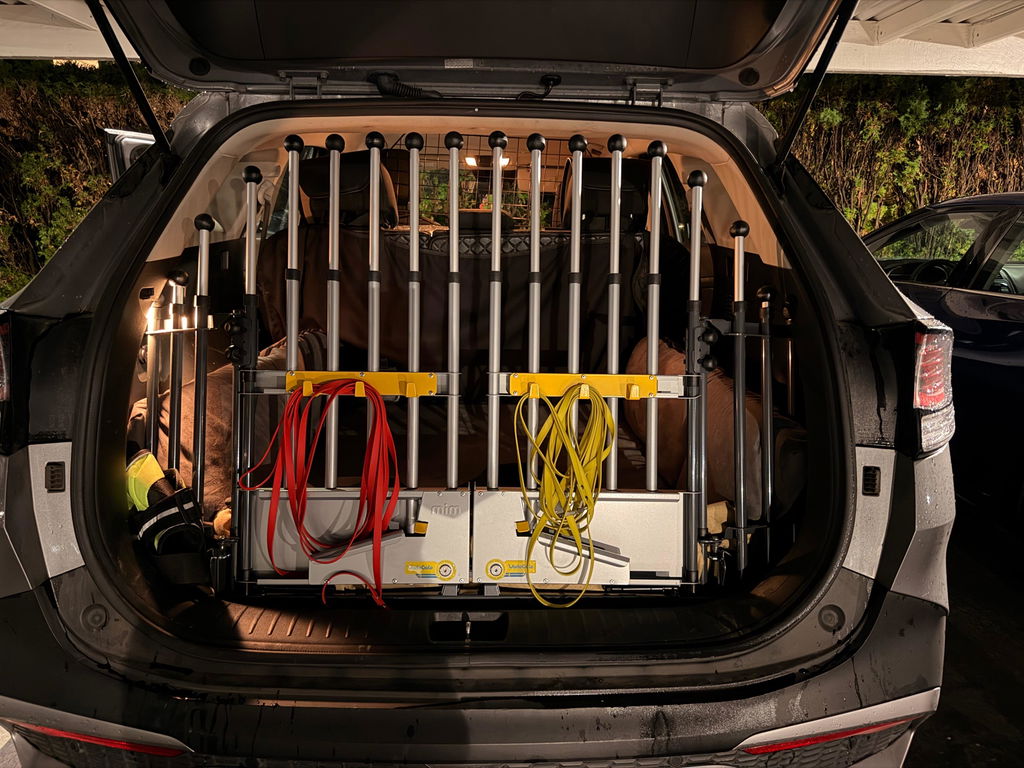
If you prefer a more open setup, the Variogate and VarioBarrier create a secured area in the cargo space. The Variogate adjusts in height, width, depth, and rear-door angle, and it works with the barrier to form a contained zone behind the rear seats. For help choosing between the two approaches, see our comparison of a dog car barrier versus a crate.
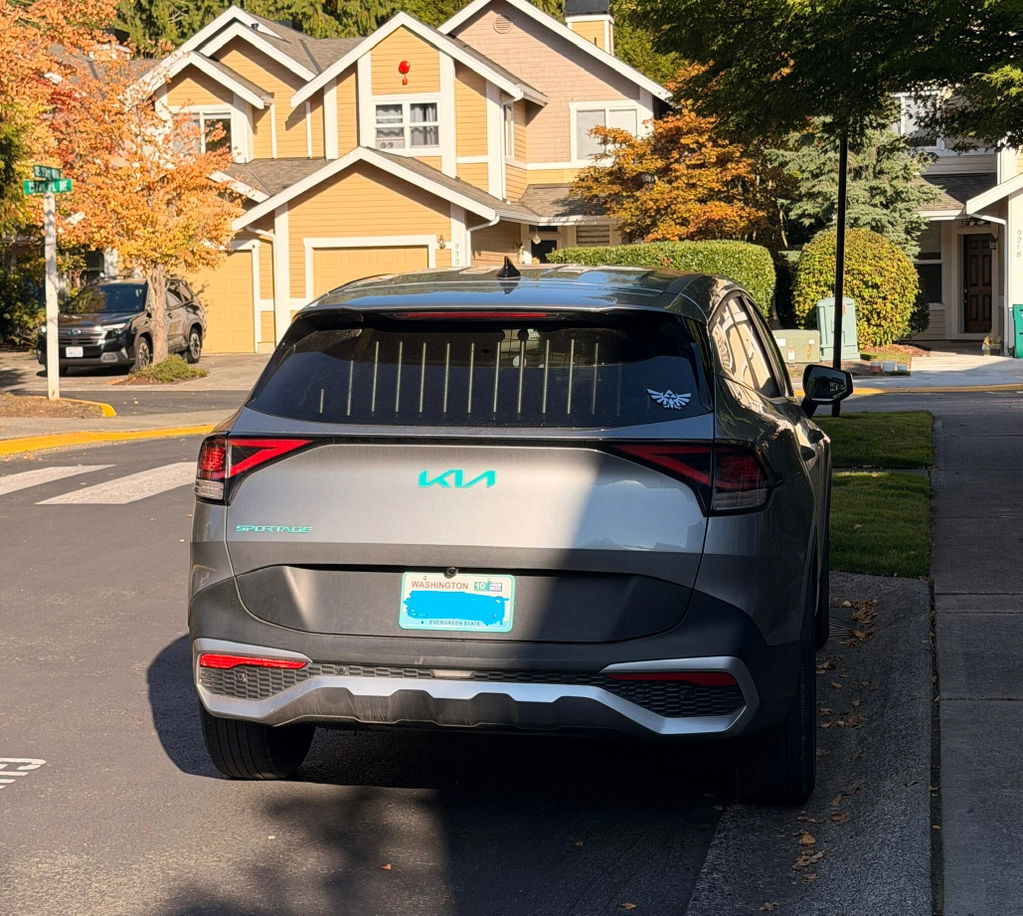
Customers have reported fitting Variocage crates in vehicles such as the Subaru Outback, Hyundai Palisade, and GMC Acadia, and Variogates in vehicles such as the Toyota RAV4 Hybrid and Kia Sportage. Those reports are encouraging, but fit depends on model year, trim, and your dog. That is why our team confirms measurements with every customer before an order ships and backs them with our Fit Guarantee when you send us your vehicle's measurements.

An SUV's cargo area is not a safe place for a loose dog. AAA notes that a 30-pound dog in a vehicle traveling 60 miles per hour would need roughly 1,800 pounds of restraining force to hold, which is why holding a dog in your arms is not an option. Pet safety advocates cited by Consumer Reports estimate that a 60-pound dog in a 35 mph crash can become a projectile carrying roughly 2,700 pounds of force. That puts your dog, you, and every passenger at risk.
There is also a labeling problem. Consumer Reports points out that there are no government standards for pet travel products, so crash tested on a label often reflects only the manufacturer's own claim. Ask what standard a product was tested to and who did the testing. MIM Safe states that the Variocage is certified to ISO 27955, ECE R-17, and ECE R-44 and was tested by the SP Technical Research Institute of Sweden. The AllSafe dog seat belt harness is tested to DIN 75410-2, ECE R-17, and FMVSS 213, and it is intended for the rear seat only.
Laws are catching up unevenly. AAA notes that restraint rules vary by state, with some requiring dogs to be secured and others applying distracted-driving or animal-cruelty laws, so check the rules where you drive. Wherever you live, the safest arrangement is the cargo area with a crash-tested crate or barrier, or the rear seat with a properly fitted harness. Keep dogs out of the front seat, where airbags are designed for adult passengers.
Beyond the basics above, a few features make daily life with a dog easier. A power liftgate, especially one with an adjustable opening height, saves your back and your head when you are loading a crate. Rear seats that fold nearly flat give you flexibility when your dog's travel needs change. Durable upholstery and a rubberized cargo liner hold up to mud and shedding, and an aftermarket liner is an inexpensive add-on in nearly any SUV, so you do not need to pay a premium for a factory pet package.
Visibility and comfort count too. Dogs who ride in the cargo area do better with fresh air, a stable temperature, and regular stops, so plan on a break about every two hours for water and a short walk.
Not every dog owner drives an SUV. If you drive a pickup and want a secure, ventilated place for your dog in the bed, start with our guide on how to choose a dog box for your truck, then compare options in our roundup of the best dog boxes for truck beds. AAA notes that several northeastern states require dogs in open truck beds to be secured in a crate or cage, so confirm the rules where you drive.
The best SUV for a large dog is the one whose cargo area fits a properly sized crate or barrier with room to spare. For large breeds, the Santa Fe, Outback, and CR-V offer the most cargo room in this guide, although room alone is not enough. Measure your dog and your cargo area before you decide.
There is no single number. What matters is that the space your dog travels in is long and tall enough for them to stand, turn, and lie down, which means your dog's length and height plus about 3 inches each. Then verify that those dimensions fit between the wheel wells and under the lowest point of the cargo opening.
For most dogs, yes. SUVs give you a separate cargo area, a taller opening, and rear seats that fold flat, which makes it easier to use a crate or barrier. The Variocage line, for example, is designed for SUVs, station wagons, and minivans with a flat cargo floor and is not designed for sedans. If you drive a sedan, a crash-tested harness on the rear seat is the usual option.
Not every SUV and not every model year. You need a flat cargo floor and enough width, length, and height, and raised sills or sloping rooflines can interfere. Call us at 888-979-5566 with your measurements before ordering, and we will confirm the right size for your vehicle.
Yes, but check the cargo floor height and measure the space. Some hybrids give up a little cargo room behind the rear seats because of components under the floor, as the CR-V Hybrid does compared with the gas model. If your crate height is already tight, that difference can matter.
In the cargo area inside a crash-tested crate or behind a crash-tested barrier, or on the rear seat in a properly fitted crash-tested harness. Avoid the front seat, and never let a dog ride loose.
Not necessarily. Many 2027 models are arriving at dealers, and specifications can change between model years. Whichever year you choose, measure that specific vehicle's cargo area instead of relying on last year's numbers.
The best SUVs for dog owners are the ones that fit your dog, your lifestyle, and a safe way to restrain your dog. Use the cargo numbers in this guide to build a shortlist, measure each finalist, and make sure the floor, the opening, and the tie-down points suit a crate or barrier before you sign anything.
When you are ready to equip the vehicle, explore our collection of crash tested dog crates for cars and our cargo gates and barriers, or read our overview of the best dog crate for car travel. Our US-based team will review your measurements and recommend the right size, backed by our Fit Guarantee. Call 888-979-5566, start a live chat, or send a message through our contact page.
AdeoPets has served dog owners for seven years and holds a 4.9-star rating across more than 600 customer reviews. If you find a lower price online, our Price Match Guarantee has you covered.