May 01, 2019
0

If you own a large, powerful, or anxious dog, you already know what a standard wire crate can and cannot do. Panels bow outward under sustained pressure. Slide-bolt latches work loose after a few weeks of determined pawing. A crate built around a 40-pound family dog was never engineered to hold an 80-pound German Shepherd who treats confinement as a puzzle to solve. That is not a training problem. It is a mismatch between the dog's strength and the crate's design limits.
Heavy-duty dog crates for large breeds solve that mismatch with thicker materials, reinforced doors, and locking systems built to stay closed under real pressure. This guide walks through what actually separates a genuinely heavy-duty crate from one that just says "heavy duty" on the box, and covers the specific crates we recommend for large and giant breeds, working dogs, and dogs with a documented history of escaping.
Most wire dog crates on the market are built around a dog with no real history of pushing back against confinement. The wire gauge is thin enough to flex under sustained pressure, and the corner joints, where panels connect, are almost always the first point of failure. A dog that leans into a corner repeatedly will eventually work the connection loose. Standard slide-bolt latches compound the problem. A single latch at a single point on the door is not built to resist a 90-pound dog throwing its full body weight against it, and once a dog learns that pushing in the right spot works, the behavior repeats and escalates.
The consequences go beyond a bent crate. Dogs that force their way out of inadequate containment commonly injure themselves in the process, cutting paws on bent wire or bloodying noses against door frames. A crate that cannot hold the dog is not a minor inconvenience. It is a safety gap, and it is also the source of a lot of unnecessary stress for both the dog and the owner.
Genuinely heavy-duty construction closes that gap with thicker gauge materials, wider structural members, and locking hardware designed around the forces a large, strong, or anxious dog can actually generate, not the forces a typical household pet generates.

The term gets used loosely across the pet products market, attached to everything from genuinely reinforced professional equipment to a standard wire crate with a marketing sticker. It helps to know what to check regardless of brand.
Three materials dominate the genuine heavy-duty category, and each comes with a different set of trade-offs. Steel tube construction is common in the home containment category. At 20-gauge or thicker, it resists bending well, but it adds significant weight, often 70 pounds or more for a large-breed size, and it needs a quality coating to resist rust over time.
Aircraft-grade aluminum, the material behind our Zinger crate lines, delivers a comparable or better strength-to-weight ratio at roughly a third the weight of steel. It will not rust, it dissipates heat quickly, which matters more than people expect in a warm garage or a parked vehicle, and it is light enough for one person to lift and reposition without help.
Rotationally molded, military-grade polyethylene, the approach Dakota 283 uses, forms a single seamless shell with no corner joints or weld points to fail. It is the most impact-resistant of the three materials and the easiest to hose clean, though the finished product runs bulkier than an equivalent aluminum crate.
A single slide-bolt latch is the minimum standard, and it is not enough for a genuine escape artist. Look for a keyed slam latch, a secondary locking plate on the door frame, or a multi-point locking mechanism, depending on the product. The door is consistently the weakest point on any crate, so the quality of its locking hardware tells you more about real-world escape resistance than almost any other spec on the page.
Welded solid bars, a full-length piano hinge, and a striker plate all indicate a door built to take repeated pressure without loosening over time. A crate marketed as heavy-duty with a thin, unreinforced door frame is wearing the wrong label.
AdeoPets has spent seven years working with professional trainers, kennel operators, and serious dog owners who need containment that actually holds up. We carry two brands built specifically around the failure points above, and each solves a slightly different version of the large-breed containment problem.
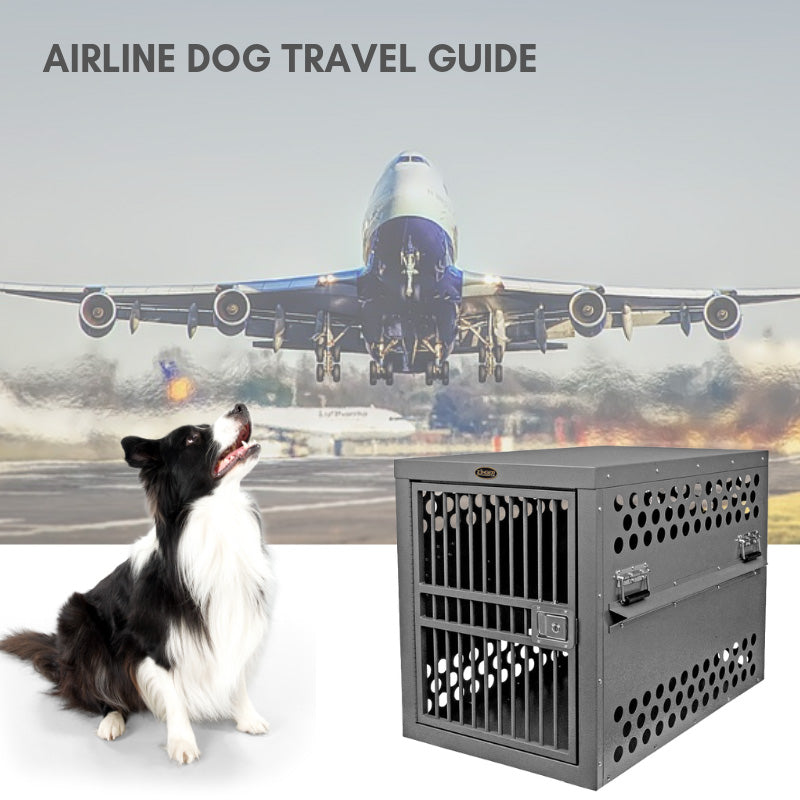
Zinger crates are built from aircraft-grade aluminum, roughly a third the weight of an equivalent steel crate, with all lock and mounting hardware in stainless steel to eliminate rust. Every crate is finished inside and out with a baked-on Silver Hammertone powder coat, which matters more than it sounds. Untreated aluminum oxidizes and leaves a silvery residue on a dog's coat, and the interior coating prevents that entirely. Triple rows of vent holes along the sides and back wall, combined with aluminum's natural heat dissipation, keep the interior noticeably cooler than a comparable steel crate. Every size is modular, so multiple units can be stacked or coupled side by side to build a kennel bank for professional or multi-dog setups.
We carry three tiers of the Zinger line, and the right one depends on how hard your dog is actually working against the crate. The Zinger Deluxe Aluminum Dog Crate is the lightest of the three and the right starting point for calm to moderately active large breeds that need a durable, portable crate for home, travel, or kennel use without a documented escape history. The Zinger Professional Aluminum Dog Crate adds extra welds, bracing, and a secondary locking plate to the door frame, the single most common point of failure on any crate, and it is backed by a 90-Day No Escape Guarantee. It is the crate we recommend most often for dogs with separation anxiety or a track record of working at latches and corners. The Zinger Heavy Duty Aluminum Dog Crate sits at the top of the line, with the most reinforced door and frame construction Zinger builds. It is the option for the most extreme cases: dogs who have already defeated a Professional-grade crate, working K9s, or facilities that need the highest available escape resistance in an aluminum crate.
All three tiers run from the compact 3000 size (21"W x 24"H x 30"L) up through the 6000 (28"W x 36"H x 44"L), which comfortably fits giant breeds like Great Danes, Mastiffs, and Saint Bernards.

Dakota 283 takes a different approach entirely. Rather than a paneled frame, each crate is rotationally molded from a single piece of high-grade polyethylene, the same manufacturing process used for military cargo containers and heavy-duty fuel cells. With no seams or corner joints, there is no weak connection point for a determined dog to find.
The Dakota 283 Hero Kennel is built specifically for working dogs, aggressive dogs, and situations that call for maximum security. It closes with a triple-locking stainless steel door that operates one-handed, a real advantage when you are managing an animal that does not want to be crated. The scattered, small-diameter ventilation holes are intentionally sized to allow strong airflow while giving a chewer nothing meaningful to bite into. A keyed paddle latch adds theft protection, and a drainage hole in the base means cleanup is a matter of tipping the empty crate and hosing it out, not scrubbing a tray. It is sized to sit in the back of most trucks, SUVs, and hatchbacks that are at least 48 inches wide, and it is molded and assembled in the USA.
For a lower-cost entry point into the same one-piece polyethylene construction, the Dakota 283 G3 Framed Door Kennel offers the same seamless shell in a more affordable package. It is a solid option for large breeds that need genuine durability without the full working-dog feature set of the Hero line.

It is worth separating two problems that both get called "heavy duty." A crate that resists a dog's escape attempts at home is not the same thing as a crate engineered to protect a dog in a vehicle collision. If your large breed rides in the car regularly and vehicle safety is the priority, our MIM Safe Variocage line is crash tested to European automotive safety standards, a level of testing home containment crates are not built or rated for. It is a different product for a different job, and it is worth knowing the distinction before you buy.
Sizing mistakes are the most common source of buyer disappointment with any crate, heavy-duty or not, and the fix is straightforward. Measure your dog's body length from the tip of the nose to the base of the tail, not the tip of the tail, and add 4 to 6 inches. That is your minimum interior crate length. Measure from the floor to the top of the dog's head while standing, add 2 to 4 inches, and that is your minimum interior height. Always check these numbers against the manufacturer's stated interior dimensions rather than the exterior crate size, since wall thickness varies meaningfully between steel, aluminum, and polyethylene construction. For a broader breakdown of the sizing process, see our guide on how to choose the right home dog crate for your breed.
|
Dog Size |
Example Breeds |
Suggested Crate Length |
Suggested Interior Height |
|
Large (55-90 lbs) |
German Shepherd, Labrador, Boxer, Husky |
36-42" |
26-30" |
|
Extra Large (90-130 lbs) |
Rottweiler, Giant Schnauzer, Bernese Mountain Dog |
42-48" |
30-34" |
|
Giant (130+ lbs) |
Great Dane, Mastiff, Saint Bernard, Newfoundland |
48-54"+ |
34-36"+ |
If your dog falls at the upper end of the giant breed range and does not fit comfortably in a standard 54-inch crate, our team can walk you through Zinger's larger 5500 and 6000 sizes or discuss a configuration built around your dog's actual measurements.
A note on giant breeds: the 54-inch crate is the practical upper limit of most commercially available heavy-duty options. Dogs at the very large end of the giant breed spectrum — male Irish Wolfhounds, larger Mastiff types, and some Great Dane males — may need custom fabrication or professional-grade kennel systems rather than standard retail crates. If your dog is at the upper end of the XXL category and does not fit comfortably in a 54-inch crate, the AdeoPets team can discuss professional kennel configurations that are built to accommodate dogs of any size.
A quick way to think about which construction fits your situation: if your dog is strong or anxious but has not shown a pattern of targeting latches and corners, the Zinger Deluxe or Dakota 283 G3 covers most large-breed needs. If your dog has a documented history of working at a crate's weak points, the Zinger Professional or Dakota 283 Hero closes the gaps that caused a previous crate to fail. If your dog has already escaped from a reinforced crate, the Zinger Heavy Duty is the next step up in aluminum construction. And if the crate's primary job is riding safely in a vehicle rather than standing in a room, a crash-tested option like the MIM Safe Variocage is the correct category entirely, not just a heavier version of a home crate.
What is the best heavy-duty dog crate for large breeds?
It depends on the dog. For calm to moderately active large breeds without an escape history, the Zinger Deluxe or Dakota 283 G3 Framed Door Kennel both offer genuine heavy-duty construction at a reasonable price. For dogs with separation anxiety or a track record of working at latches, the Zinger Professional or Dakota 283 Hero Kennel add the reinforced locking and door construction that stops those attempts. For the most extreme cases, the Zinger Heavy Duty sits at the top of the aluminum category.
Is aluminum or steel better for a large-breed dog crate?
Aircraft-grade aluminum offers a better strength-to-weight ratio than steel, will not rust, and dissipates heat faster, which matters in warm climates. Steel can match or exceed aluminum's raw escape resistance at a lower price point, but it adds significant weight and needs a quality coating to prevent corrosion over time. Rotationally molded polyethylene, like Dakota 283, trades some of that strength-to-weight advantage for a completely seamless shell with no joints for a dog to work loose.
Can a heavy-duty crate be used for an aggressive or working dog?
Yes, and it is one of the primary use cases both Zinger and Dakota 283 are built around. The Dakota 283 Hero Kennel is specifically designed for aggressive dogs and dogs needing additional security, with a one-piece shell and triple-locking door. The Zinger Professional and Heavy Duty lines are built around the same use case in aluminum, with reinforced doors and a No Escape Guarantee on the Professional tier.
How much does a heavy-duty dog crate cost?
Genuinely heavy-duty crates for large breeds typically range from several hundred dollars for an entry-level tier up to over a thousand dollars for the most reinforced aluminum or military-grade polyethylene options. The price difference reflects real material and construction differences, not just marketing. A crate that fails and needs replacing, or that results in a dog escaping and getting injured, usually costs more in the long run than buying the right crate the first time.
What size crate does a large or giant breed dog need?
Measure your dog's body length from nose to base of tail and add 4 to 6 inches for the minimum interior length, then measure floor to the top of the head and add 2 to 4 inches for minimum interior height. Most large breeds, 55 to 90 pounds, need a 36 to 42 inch crate, while giant breeds like Great Danes and Mastiffs typically need 48 inches or more. Always verify against the manufacturer's stated interior dimensions rather than the exterior size.
Are heavy-duty dog crates safe for car travel?
A heavy-duty home containment crate and a crash-tested vehicle crate solve different problems and are tested to different standards. If vehicle safety is the priority, look for a crate specifically crash tested for automotive use, such as the MIM Safe Variocage, rather than assuming a heavy-duty home crate provides equivalent protection in a collision.
Every dog is a little different, and the right crate depends on your dog's size, behavior, and how the crate will actually be used. Our team has spent years helping large-breed owners, professional trainers, and working dog handlers match the right crate to the right dog, and we are happy to walk through the details, including confirming sizing before your order ships. Call us at 888-979-5566, start a live chat, or reach out through our contact page. We are backed by a 4.9-star rating across 626+ verified reviews, and every crate we carry is covered by our Price Match Guarantee, so if you find a lower price elsewhere, we will match it.