May 01, 2019
0


If you're shopping for an outdoor kennel, you've likely run into two main options: the modern modular dog kennel with welded wire mesh panels, and the traditional chain link kennel built from galvanized steel fencing. Both will contain your dog. Both are widely used. But they are not the same, and for serious dog owners, the differences matter quite a bit.
This guide breaks down how modular kennels and chain link kennels compare across the factors that matter most — safety, durability, setup, cost, and suitability for different types of dogs and situations. By the end, you'll know which is the right choice for your dog, your property, and your long-term needs.

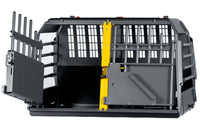
A modular dog kennel is built from pre-fabricated panels that snap or clamp together without requiring special tools or permanent installation. Most panels are constructed from welded wire mesh — steel wires that are welded at every intersection — framed in a rigid steel border. The defining feature is flexibility: panels can be assembled, disassembled, reconfigured, or expanded simply by adding more sections.
Premium modular kennels use 8-gauge welded steel mesh, which is significantly heavier and stronger than the 11.5- or 12-gauge wire typical of standard chain link. The framed panel design also means there are no loose wire ends or sharp edges exposed to your dog. Many commercial-grade modular kennels feature powder-coated finishes for rust resistance and a clean, professional appearance.
Modular kennels are common in professional grooming facilities, veterinary boarding areas, kennels for working dogs, and high-end residential applications. They are purpose-built for situations where containment quality, reconfigurability, and safety are non-negotiable.
Chain link kennels use interlocked steel wire fabric — the familiar diamond-pattern fencing — stretched across a galvanized steel tube frame. The fabric is typically 11.5- to 12-gauge wire with a 2.25-inch mesh opening, though heavy-duty versions are available in 9-gauge or smaller mesh. Standard chain link kennel kits are sold as boxed sets with pre-cut panels, posts, and hardware, and the buyer assembles the frame on-site.
Chain link has been a standard for dog containment for decades, and its longevity speaks to its durability in outdoor environments. Galvanized steel resists rust well, and well-maintained chain link kennels can last 20 years or more. The open diamond pattern provides excellent visibility and airflow, and chain link is generally less expensive per square foot than a comparable premium modular kennel setup.
However, chain link presents some real trade-offs, particularly around safety and ease of use, that are worth understanding before you decide.
Safety is where modular kennels have the clearest advantage, and it's the category that matters most for responsible dog ownership.

Chain link's diamond-shaped openings are large enough for dogs — especially medium to large breeds — to get their paws, nails, or even collars caught in the mesh. This is a documented hazard. Dogs that pace, dig at the fence line, or jump against the kennel walls are at meaningful risk of getting a paw or leg trapped in the chain link weave, which can result in serious injury or panic-driven injury if they can't free themselves.
Modular kennels with 2x4 welded wire mesh panels have a much tighter, more uniform opening pattern. The grid is engineered to prevent limb entrapment, and because the wire is welded at every intersection rather than woven, there are no flexible gaps that can widen under pressure. For dogs that are active, anxious, or prone to throwing themselves at fencing, this is a significant safety improvement.
Chain link fabric is cut to size during manufacturing and installation, which leaves exposed wire ends at the bottom and top edges of panels. Even with careful finishing, these ends can create snag and cut hazards over time — particularly for dogs that dig or scratch along fence lines. Chain link that has deformed from impact or age can develop protruding wire ends that weren't present when the kennel was new.
High-quality modular kennel panels are factory-finished with squared, welded corner construction and no exposed wire ends. The entire perimeter of each panel is enclosed within the steel frame, so there is nothing for your dog to catch a paw or face on. This difference is especially relevant for puppies, small dogs, and thin-skinned breeds.
A common issue with chain link kennels is the gap between the bottom of the panel and the ground. Chain link fabric is somewhat flexible, and dogs quickly learn they can push, lift, or dig under the bottom rail. Many experienced dog owners address this by wiring down every square along the bottom rail — a time-consuming modification that is essentially mandatory for escape artists or determined diggers.
Modular panels typically sit with a small ground clearance on extended legs, which serves a practical purpose: it makes cleaning easier and prevents the metal from sitting in standing water or urine. But that clearance is controlled and consistent, and the rigid panel construction does not flex or lift under normal pressure from a dog the way loose chain link fabric does. Securing the base of modular kennels is a simpler, cleaner process.
Both kennel types can last for many years when properly maintained. But they age differently, and the type of dog you're housing matters a lot here.
Heavy-gauge chain link — specifically 9-gauge or heavier — is extraordinarily strong and resistant to impact. Experienced working dog and hunting dog owners often cite 20-year-old chain link panels still in service. The galvanized finish resists rust effectively, and the woven construction distributes stress across the entire panel rather than concentrating it at welds. For a large, powerful breed that regularly throws itself against the fence or attempts to chew through, heavy-gauge chain link performs well over time.
The caveat is that standard chain link sold in most kennel kits is not heavy-gauge. Most boxed kits use 11.5- or 12-gauge wire, which is noticeably thinner and can deform under sustained pressure or impact from a determined large dog. Once chain link fabric deforms, it does not return to its original shape, and the integrity of the kennel is compromised.
Premium 8-gauge welded wire modular panels are over 50% stronger than standard chain link fabric, and the rigid framed panel design resists deformation well. The powder coat finish on quality modular kennels protects against rust even when exposed to dog urine, rain, and moisture cycling — the main cause of early rust failure in cheaper wire products. The key phrase here is premium quality: budget modular kennels with thin wire and minimal coating will not outlast quality chain link.
This is where modular kennels win decisively for most modern dog owners.
Chain link kennel installation is a real construction project. Posts need to be set in the ground or anchored to a concrete pad. The fabric needs to be stretched, fastened, and secured with tie wires along every square of the bottom rail. Getting everything square, tight, and stable takes time, experience, and the right tools. Reconfiguring or moving a permanently installed chain link kennel is not a small undertaking.
Modular kennels are built for exactly the opposite experience. Pre-fabricated panels stand upright and connect to adjacent panels using two steel clamps and a wrench. A single person can assemble most modular kennel configurations in under an hour. If you need to change the size, add a run, divide the space, or move the kennel to a different location on your property, you disassemble the panels, move them, and reassemble. No tools required beyond a basic wrench, no permanent modification to your yard or floor.
For professional grooming facilities, boarding kennels, veterinary clinics, and other commercial operations, this reconfigurability is essential. Needs change. Client volumes fluctuate. New services get added. A modular kennel system can grow, shrink, and reshape to match those changes without purchasing an entirely new structure.

Chain link has a lower entry price, and that is a real advantage if budget is the primary constraint. A standard 10x10 chain link kennel kit typically costs less than an equivalent premium modular setup. For a basic backyard kennel for a calm, medium-sized dog, chain link delivers solid containment at a lower upfront investment.
However, the true cost comparison is more complicated than the sticker price. Professional chain link installation adds labor costs that do not apply to a self-installed modular kennel. If you move, renovate, or need to change your kennel configuration, chain link requires significant rework while modular panels simply get reassembled. Quality modular kennels carry warranties and use rust-resistant finishes that reduce maintenance costs over the product's life. And if a modular panel ever gets damaged, individual panels can be replaced without rebuilding the entire kennel.
For professional and commercial buyers, the operational flexibility of modular kennels often justifies the higher initial cost quickly. For home dog owners who plan to keep the same kennel in the same location for many years, chain link can be the more economical choice — provided you invest in a quality gauge of wire, not the lightest option available.
The honest answer is that neither option is universally better — the right choice depends on your specific situation. Here is how to think through it.
You operate a grooming salon, boarding facility, veterinary clinic, or working dog kennel where professional appearance, reconfigurability, and easy cleaning matter. You have an active, large, or escape-prone dog where safety features like tight mesh openings and no exposed wire ends are priorities. You rent your home or want the option to take your kennel with you when you move. You want to be able to expand or reconfigure the space as your needs change. You value a clean, professional-looking setup that won't detract from your property's appearance.
You are a homeowner installing a permanent kennel in a fixed location and do not plan to move or reconfigure it. Budget is a primary constraint and you are comfortable with a DIY installation. You are housing working dogs, hunting dogs, or large sporting breeds in a rural or agricultural setting where heavy-duty longevity is the top priority and you are willing to invest in 9-gauge or heavier wire. You have adequate time and skill to ensure the chain link fabric is properly secured along the entire bottom rail and all edges.
Regardless of which system you choose, wire gauge is one of the most important factors in the quality of your kennel. For chain link, 9-gauge is the professional standard for working and active dogs — avoid 12-gauge or lighter for any dog that tests fencing. For modular welded wire kennels, 8-gauge commercial-grade panels represent the best combination of strength, safety, and durability. Standard household pet products that use thin wire or minimal framing will not perform like professional-grade equipment.

High-quality modular kennels built from 8-gauge welded wire mesh are actually stronger than standard chain link, which typically uses 11.5- or 12-gauge fabric. The welded construction at every wire intersection resists deformation better than the woven chain link pattern under sustained pressure. However, heavy-gauge chain link (9-gauge and above) is an extremely durable option, particularly for large, powerful breeds in permanent installations.
Yes, provided you choose a kennel built with quality rust-resistant materials. Look for powder-coated steel frames and galvanized or coated wire. Premium commercial-grade modular kennels are designed for permanent outdoor exposure in all weather conditions. In harsh climates, adding a kennel cover or weatherproof roof panel protects your dog and extends the life of the kennel.
The kennel should be large enough for your dog to stand, turn around, lie stretched out, and move comfortably. As a general guideline, a dog should have at minimum twice their body length in run length. For most medium to large breeds, a 5x10-foot kennel is a starting point, but more space is always better for dogs that spend extended time in the kennel. For professional facilities, individual runs are typically 4-5 feet wide and 10-12 feet long.
The most common escape routes are under the bottom rail, through loose or deformed panels, and over the top. Securing the bottom edge thoroughly — either with stakes, a concrete pad, or attaching every connection point along the ground — eliminates digging escapes. Choosing a kennel with tight, rigid panel construction prevents dogs from deforming the mesh and finding gaps. For climbers, a kennel with a roof panel or lean-in anti-climb top is the most reliable solution.
A commercial-grade modular kennel with powder-coated steel framing and quality wire mesh can last 10 to 15 years or more with normal use and basic maintenance. The main longevity factors are finish quality, wire gauge, and how well moisture is managed around the base of the panels. Kennels that sit in standing water or are regularly exposed to urine without rinsing will corrode faster. Quality products from reputable manufacturers often carry warranties that give you a sense of their expected lifespan.

At AdeoPets, we carry professional and premium-grade dog kennels built for real use — not just backyard decorations. Whether you're outfitting a veterinary boarding facility, a grooming salon, a working dog operation, or a high-quality home setup, our kennel selection includes the heavy-duty modular dog kennel systems that professionals rely on.
If you're unsure which kennel configuration is right for your space and your dogs, our team is happy to help. Call us at 888-979-5566 or use the live chat on our site — we'll talk through your requirements and make sure you get a setup that works from day one.